

Ellen De Beer
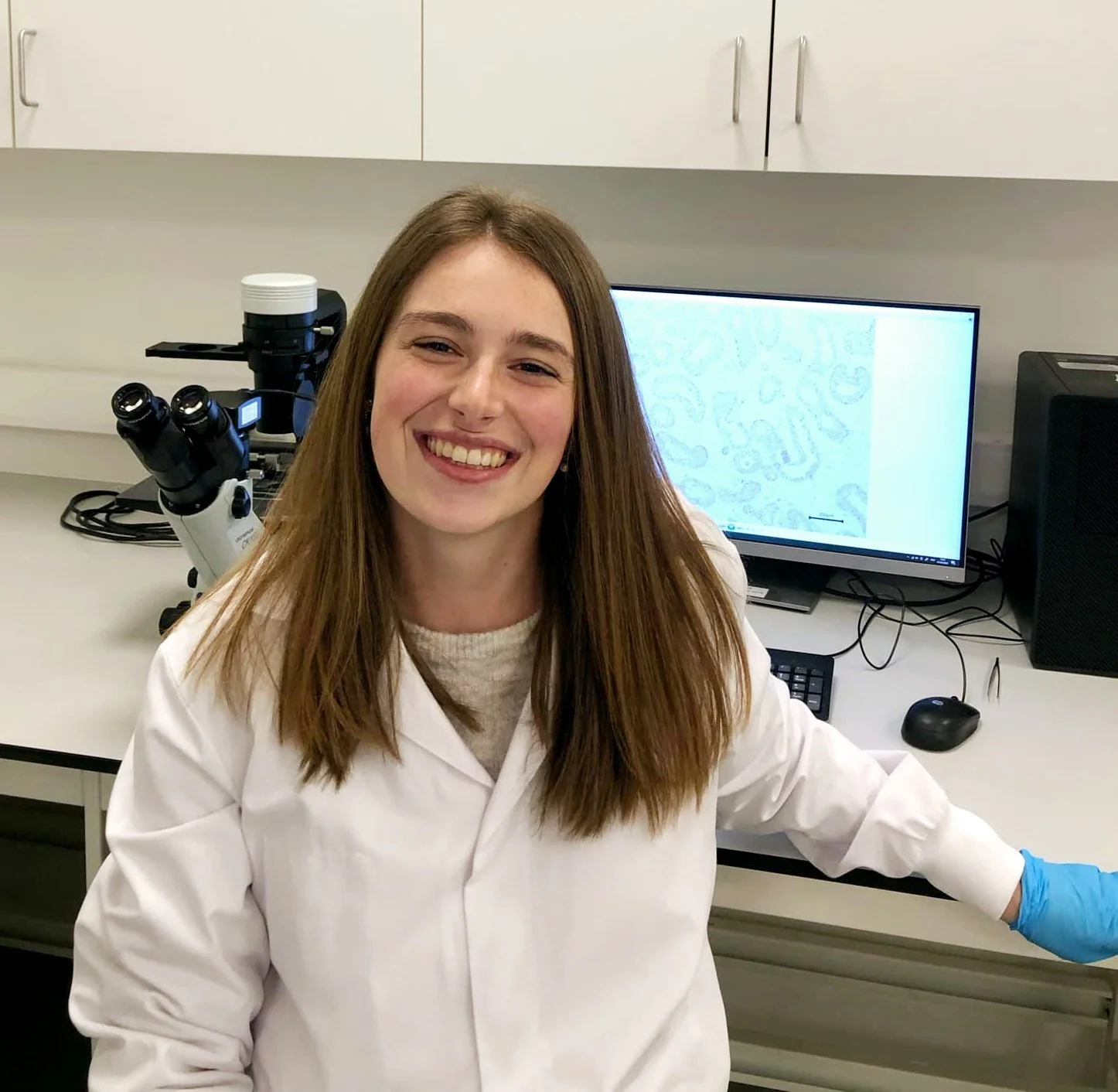
We are excited to introduce you to Ellen De Beer, Ellen is a enthusiastic PhD student at the Vrije Universiteit Brussel. In the following interview she explains more about her research.
Can you share a little bit about yourself?
I studied Biomedical Sciences at the Vrije Universiteit Brussel. In my bachelor’s, I did an observational internship at UZ Brussel focused on sample preparation for IVF/ICSI, specifically in assessing sperm count, motility, and morphology. From that day on, male fertility became my favorite subject. During my master’s, I had the opportunity to complete an internship at the Biology of the Testis (BITE) research group. I obtained my master’s degree in June 2024 and started as PhD student at BITE in January 2025. When I am not in the lab, you will most likely find me on the tennis court.
Can you tell us about your current thesis project? What research question(s) are you exploring?
I am a second-year PhD student at the BITE research group at the Vrije Universiteit Brussel, under the supervision of Prof. Dr. Ellen Goossens. My research focuses on fertility preservation and restoration in men.
The first objective of my PhD is to complete 25 years of patient follow-up to gain a better understanding of the long-term effects of childhood gonadotoxic treatments and immature testicular tissue banking on the pubertal development and reproductive function. Clear identification of boys and adolescents who experience gonadal dysfunction and subsequent infertility will allow us to refine the inclusion criteria for immature testicular tissue banking.
The second objective is to investigate the potential direct and/or indirect effects of ICIs on the testis and male fertility using a mouse model, with the aim of determining whether fertility preservation should be considered.
In collaboration with UZ Brussel, our research group performed the first autologous transplantation of cryopreserved immature testicular tissue to restore male fertility. The third objective of my PhD is to validate autologous testicular tissue grafting as a fertility restoration strategy for men who have become infertile following gonadotoxic treatment during childhood.
What skills and knowledge have you developed during your PhD?
I enhanced my abilities in critical thinking, literary research, as well as the analysis, interpretation, and communication of results. At BITE, I collaborate with a team of highly experienced colleagues, enabling me to become an expert in male fertility preservation.
An internship gives you a sneak preview into working in research or clinical sciences. Is this the way you expected it?
Since I completed my internship at the BITE group, I already had a clear understanding of what to expect from the PhD and the research environment.
What do you like most about your work?
I like that my research combines experimental work with clinical studies.
What are your plans or dreams after finishing your PhD?
I would like to make a meaningful contribution as a researcher.
Do you have any advice for students who are considering a similar internship or field of study?
Don’t be afraid to ask questions if something is unclear, even if you have to ask the same question ten times before you fully understand it. As long as you show dedication, you will earn the respect of your supervisors and colleagues.