

Nina Neuhaus
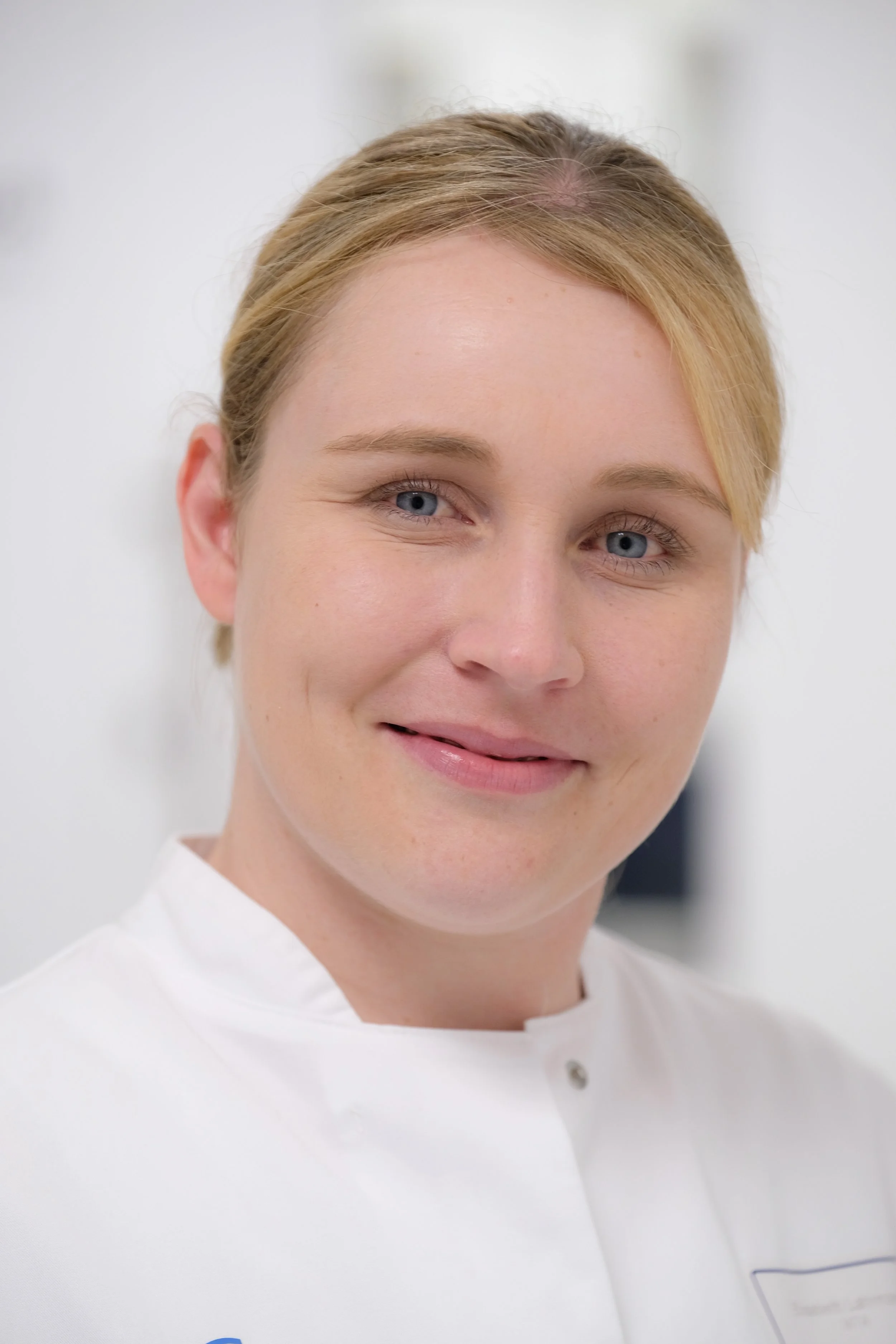
We are excited to introduce you to Nina Neuhaus, a biologist and Associate Professor at the Centre of Reproductive Medicine and Andrology (CeRA). She leads the “Germline Stem Cells” research group, where her work focuses on advancing our understanding of reproductive biology and germline stem cell research.
How did you find your way into the field of fertility preservation?
During my PhD, I joined the laboratory of Prof. Renee Reijo Pera at UCSF, and later at Stanford University, where I studied the cellular and molecular characteristics of human spermatogonial stem cells. For my postdoctoral work, I joined the CeRA because of its strong translational research focus. In this highly stimulating research environment, I have the great opportunity to scrutinize the alterations of germ cells during development and in infertility. As spermatogonial stem cells are the basis for fertility preservation approaches in boys, the work on these fascinating cells has led me to the field of fertility preservation.
If you had to choose a different field than fertility preservation, which field would you choose and why?
I thought about this question for quite some time. Since I started to work on spermatogonial stem cells almost 20 years ago, I have been absolutely fascinated by these cells. Thanks to the advent of high-resolution analyses, we finally have the chance to tackle some of the big questions in the field: What is their molecular makeup? What drives them into differentiation? How do they balance differentiation and self-renewal. Because of that, I cannot even imagine wanting to work in a different scientific field.
What moment in your career had the biggest impact on you? Or which achievement are you most proud of?
When I secured third party funding for the first time, I was wondering how to best set up a research team to address the questions that I am curious about. A colleague advised me to ‘recruit people with entirely different skillsets from my own’. I have been following this advice since and I am proud to see the level of creativity that originates from a team with different backgrounds and ideas.
What do you enjoy most about your job?
For me, working in science is the perfect job as I love to write, to teach, to travel and to work in an interdisciplinary team of colleagues, who thoroughly enjoy their job.
What advice would you give to your younger self (or to early-career researchers/clinicians)?
To base decisions on a healthy combination of what your head and your heart tell you.