

Britt Balvers
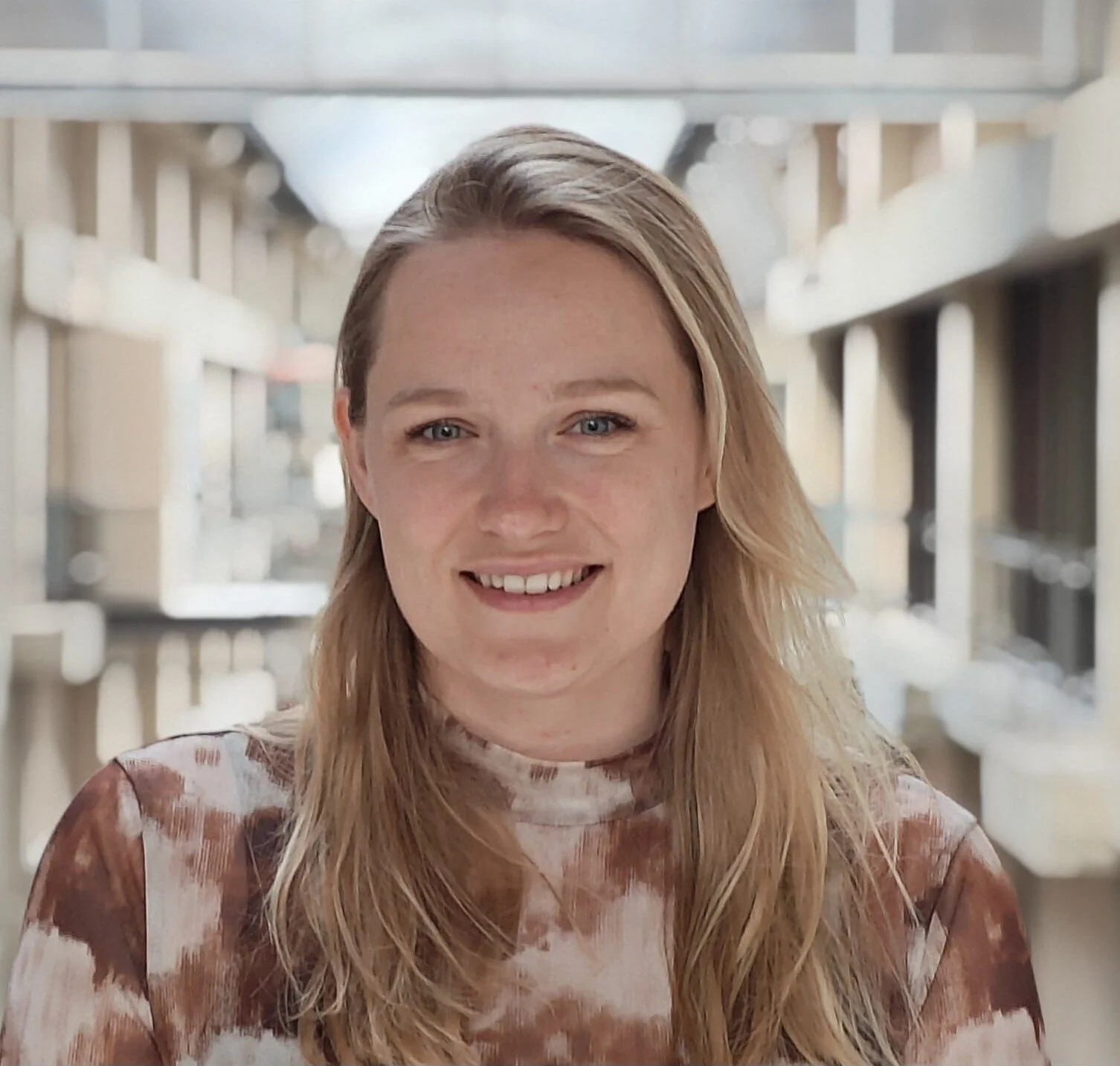
We are excited to introduce you to Britt Balvers, a highly motivated third-year PhD candidate at Amsterdam UMC. She is working on the characterization of testicular tissue from transgender women as part of her PhD research.
Can you share a little bit about yourself?
I’m a third-year PhD student in Callista Mulder’s lab at the Amsterdam UMC. I started my academic path at the Vrije Universiteit Amsterdam, where I did my Bachelor’s in Health and Life Sciences with a focus on Biomedical Sciences. I actually caught the "developmental biology bug" during my first year, and I loved it so much that I looked for a Master’s program where I could really dive into that field. I ended up at the University of Amsterdam and that’s where I first met Ans van Pelt and Callista Mulder, and I’m so happy I got to stick around and start my PhD with them.
My main research interests are in developmental biology and fertility. I really enjoy working in a clinical setting, which gives me a purpose that I find incredibly rewarding.
When I’m not in the lab, I love to get creative. My hobbies are pretty varied: I take ceramic courses, love to bake, I enjoy singing and playing field hockey.
Can you tell us about your current thesis project? What research question(s) are you exploring?
My PhD project revolves around characterizing the changes that occur in the testes of trans women after gender-affirming hormone therapy. We also focus on different treatment regimens and how that might influence the tissue in different ways.
What skills and knowledge have you developed during your internship?
I think during my Master’s internships I learned the basics of scientific research in a PhD setting. But my supervisors had busy schedules, so I could design my own experiments and research line myself and test independently. This gave me the confidence to try to get a PhD position afterwards. Of course, I also learned a lot of different techniques that have proven to be very useful during my PhD.
An internship gives you a sneak preview into working in research or clinical sciences. Is this the way you expected it?
For me it was very similar, so yes. But I think it varies per person. I ended up staying in one of the labs where I did my internship, which really helped me manage my expectations because I already knew the team and the work culture.
Can you share a funny or interesting story from the work you are doing now?
Being a scientist in the field of male fertility sometimes means you become very passionate about your research subject. During our last Sinterklaas celebration (Dutch version of Santa Claus), half of our colleagues ended up bringing gifts with a male-fertility theme, which, as you can imagine, made for quite a funny and interesting evening!
What do you like most about your internship?
I think what I loved most about my internships was getting really passionate about a research topic in addition to the nice colleagues. I really love my work environment and that is also one of the main reasons for sticking around after my Master’s, besides the very cool research topic of course.
What are your plans or dreams after finishing your internship/studies?
Actually, I am still a bit unsure about what I want to do next. Luckily, I still have 1.5 years to figure that out!
Do you have any advice for students who are considering a similar internship or field of study?
My advice is to try and find an internship in a group that is truly passionate about their work, as that will most likely spark your own enthusiasm. Moreover, make sure the people are kind, so that even when an experiment fails, you still have a nice day at work.