

Lize De Bauw
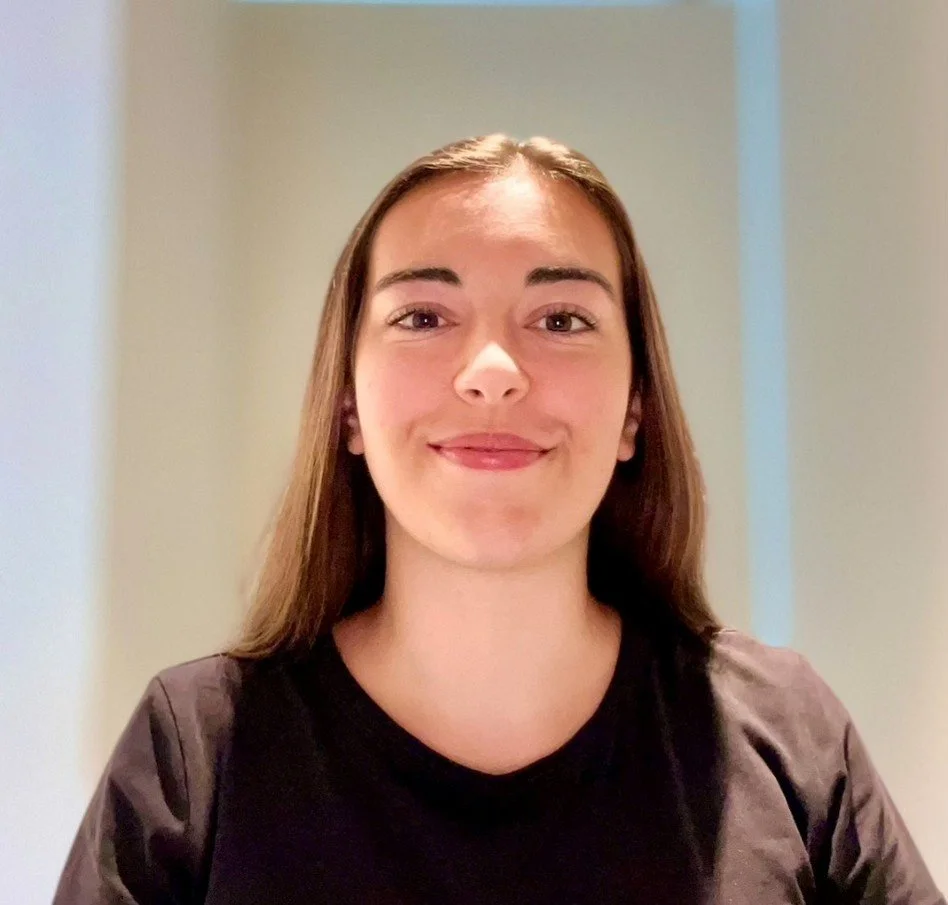
We are excited to introduce you to Lize De Bauw., a PhD student at the Vrije Universiteit Brussel (VUB), Belgium. With a background in biomedical sciences and a strong interest in male fertility. In her PhD, she focuses on optimizing testicular 3D models to more closely replicate the human testis.
Can you share a little bit about yourself?
I have a bachelor’s degree in biomedical sciences and a master’s degree in biomedical research from Vrije Universiteit Brussel (VUB). During my studies, I developed a strong interest in male fertility. I completed a nine-month internship in the Biology of the Testis (BITE) laboratory at VUB and did my master’s thesis on testicular organoids and their potential to study the effects of endocrine-disrupting chemicals on steroidogenesis. My main research interests are 3D models, organoids, and how these models can be further optimized for research.
Can you tell us about your current thesis project? What research question(s) are you exploring?
My PhD project focuses on developing fully functional human testicular organoids that more accurately recapitulate the architecture and physiology of the human testis. The work is driven by three central research questions: how the maturation state of testicular cells influences organoid formation and organization, to what extent these organoids mirror the molecular profiles of their in vivo counterparts, and how culture conditions can be optimized to enhance meiotic progression and germ‑cell differentiation. In addition, I plan to investigate whether the timing of gender‑affirming hormone treatment influences the ability of testicular cells to reorganize into organoids. Ultimately, my goal is to establish culture conditions that support complete in vitro spermatogenesis, including the generation of haploid spermatids.
What skills and knowledge have you developed during your internship?
During my nine‑month internship at BITE, I built a strong technical foundation that now makes the start of my PhD feel much more natural. I became confident working with testicular organoids (generating them, maintaining them, and analyzing their responses). I gained hands‑on experience with techniques such as qRT‑PCR, different stainings, ELISAs, and viability assays.
Now that my PhD has started, I’m building on those skills by approaching experiments with more critical thinking and independence. I’m learning to troubleshoot more efficiently, plan experiments with clearer reasoning, and think deeper about what results actually mean rather than just generating data.
An internship gives you a sneak preview into working in research or clinical sciences. Is this the way you expected it?
My internship gave me a pretty realistic preview of what working in research is like, but it also surprised me in a few ways. I expected lab work to be technical and structured, but I didn’t fully realize how much problem‑solving and flexibility are needed on a daily basis. Experiments don’t always behave the way you want, organoids don’t always grow perfectly, and sometimes you spend more time troubleshooting than actually generating data.
What do you like most about your internship?
What I enjoy most is the practical work – being in the lab, setting up a fresh organoid culture, and carefully going through all the steps. There’s something really calming about the process: preparing the cells, building the 3D structure, and hoping everything comes together. And then, a few days later, seeing beautiful, healthy organoids grow… that genuinely makes me happy. It’s a small but very rewarding moment that reminds me why I love doing this kind of research.
What are your plans or dreams after finishing your internship/studies?
I’m not someone who maps out a big future plan, but I do know that I’m really happy with the path I’m on right now. Starting my PhD has been exciting. I enjoy the work, I like being in the lab, and I feel motivated to keep growing as a researcher. My main hope is to successfully complete my doctorate and continue developing the skills I’m building now. For the moment, I’m focusing on learning as much as I can, becoming more independent in my research, and enjoying this new chapter rather than thinking too much about what comes after.
Do you have any advice for students who are considering a similar internship or field of study?
My biggest advice is to believe in yourself, even when things feel overwhelming. In the beginning, a lot of techniques seem complicated, and you might doubt whether you can handle the workload or the responsibility. I felt the same way – it didn’t always look achievable. But by staying motivated, asking questions, and pushing through the difficult moments, I ended up exactly where I wanted to be. If you’re considering this field, trust that you can grow into it. You don’t need to know everything from the start; you just need curiosity, perseverance, and the willingness to learn. Everything else follows.